Real Estate Follow-Up: The Complete System for Converting Leads to Clients
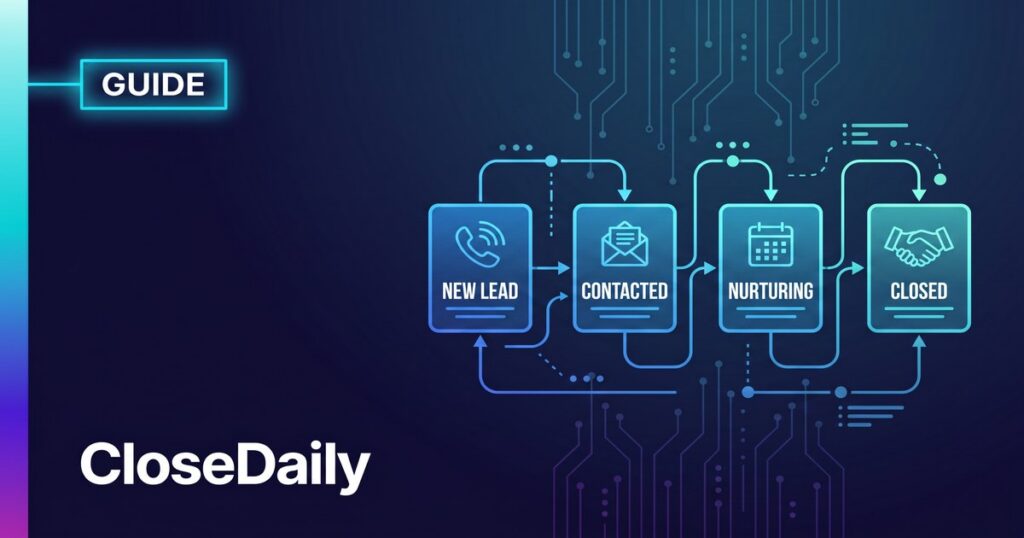
The Follow-Up Gap Is Where Most Agents Lose
Here’s a stat that should change how you think about your business: according to research from the National Sales Executive Association, 80% of sales require at least five follow-up contacts after the initial meeting — yet 44% of salespeople give up after just one follow-up. In real estate, where the transaction cycle can stretch from months to years, this gap is even more damaging.
Most agents don’t have a lead problem. They have a follow-up problem. They meet a buyer at an open house, send one email, and move on. They get a Zillow inquiry, call once, leave a voicemail, and forget about it. They have a great conversation at a networking event, exchange cards, and never follow up at all.
Meanwhile, the leads they abandoned are still out there — and eventually, they buy or sell with whichever agent was persistent enough to stay in touch. That agent should be you.
This guide is about building a follow-up system — not just learning a few scripts. A system means every lead gets the right follow-up, at the right time, through the right channel, without you having to remember or manually manage hundreds of relationships. It’s the difference between hoping you follow up and knowing you will.
Speed to Lead: Why the First 5 Minutes Matter Most
The single most important factor in lead conversion isn’t what you say — it’s how fast you say it. Research from InsideSales.com found that leads contacted within 5 minutes of their inquiry are 21 times more likely to qualify compared to leads contacted after 30 minutes. After an hour, your odds drop by 10x.
Think about what’s happening on the prospect’s end. They submitted a form, clicked “contact agent,” or sent an inquiry because they had a moment of motivation. That moment fades fast. Within minutes, they’ve moved on to another task, another agent’s listing, or another distraction. The agent who reaches them while they’re still thinking about real estate wins the conversation.
How to Achieve 5-Minute Response Time
Set up instant notifications. Every lead source — your website, Zillow, Realtor.com, sign calls, social media inquiries — should trigger an immediate notification on your phone. Not an email you’ll check later. A push notification that makes your phone buzz.
Use a text-first approach. Your first response should be a text message, not a phone call. Why? Text messages have a 98% open rate compared to 20% for email and a roughly 50% answer rate for cold calls. A quick, personalized text — “Hi [Name], I just saw your inquiry about 123 Oak Street. Great choice — I actually showed that home last week. Are you available for a quick call this afternoon?” — gets read within minutes.
Automate the initial touch when necessary. If you can’t personally respond within 5 minutes (you’re in a showing, on a call, at an inspection), set up an automated first response that acknowledges the inquiry and promises a personal follow-up shortly. This buys you time without losing the lead. For a deeper look at how automation is changing response times, read our guide on AI texting for real estate follow-up.
Building Your Multi-Channel Follow-Up System
The most effective follow-up systems use multiple communication channels because different people prefer different methods — and because each channel serves a different purpose in the relationship-building process.
Channel 1: Phone Calls
Phone calls are still the highest-conversion follow-up channel because they create real human connection. A 3-minute phone conversation builds more rapport than 10 emails. Use calls for initial contact attempts (after your text goes out), scheduled check-ins with active leads, and any conversation where you need to assess motivation, timeline, or readiness.
The key to effective follow-up calls: have a purpose for every call beyond “just checking in.” Offer a new listing that matches their criteria. Share a market update relevant to their situation. Ask a specific question about their search. Value-driven calls get returned. “Just checking in” calls get ignored.
Channel 2: Text Messages
Text is the most responsive channel for real estate follow-up. Use it for initial lead response (the speed play), quick updates and property alerts, appointment confirmations and reminders, and casual check-ins with leads you have a relationship with.
Keep texts short, personal, and conversational. Include the lead’s name. Reference something specific to their situation. End with a question that invites a response. For proven templates that get responses, check our text message templates guide.
Channel 3: Email
Email is your workhorse for longer-form communication and automated nurturing. Use it for market reports and property alerts, educational content (buying/selling guides, local market data), drip campaigns for leads who aren’t ready yet, and transaction updates and documentation.
The advantage of email is scale — you can nurture hundreds of leads simultaneously with well-crafted drip campaigns that deliver relevant content on autopilot. The disadvantage is that email open rates are declining, so email should supplement your phone and text efforts, not replace them.
Channel 4: Video Messages
Personalized video messages are the secret weapon of top follow-up agents. A 30-second video — “Hey Sarah, I just drove by a house on Elm Street that reminded me of what you described last week. Let me send you the listing” — creates a level of personal connection that no text or email can match.
Use video for standing out in a lead’s inbox (video thumbnails get clicked), following up after showings with a personal recap, re-engaging leads who’ve gone quiet, and introducing yourself to new referrals. Tools like BombBomb, Loom, or even a simple iPhone video sent via text make this easy.
Channel 5: Social Media Engagement
Following up doesn’t always mean contacting someone directly. Engaging with a lead’s social media — liking their posts, commenting on life updates, sharing relevant content — keeps you visible and top-of-mind without the pressure of a direct outreach. This is especially effective for long-term leads who are 6-12+ months from a transaction.
Follow-Up Cadences by Lead Source
Different lead sources require different follow-up frequencies and approaches because the leads arrive at different stages of readiness. Here’s the cadence that works for each major source.
Online Leads (Zillow, Website, Realtor.com)
Day 1: Text within 5 minutes, then phone call within 15 minutes. If no answer, leave a voicemail and send a personalized email. Day 2: Text with a relevant property or market update. Day 3: Phone call at a different time of day. Day 5: Email with a helpful resource (neighborhood guide, buying process overview). Day 7: Phone call + text. Day 10: Video message. Day 14: Phone call. Day 21: Email with new listings or market update. Day 30+: Transition to monthly drip campaign with value-add content.
The first 7 days are critical — this is when online leads are most likely to convert. After that, move to a less intensive nurturing cadence.
Open House Leads
Same day: Personal text referencing your conversation (within 2-4 hours of the open house). Day 1: Phone call with specific property suggestions based on their needs. Day 3: Email with listings matching their criteria. Day 7: Text checking in on their search. Day 14: Phone call with a market update. Day 30+: Monthly touches with new listings and market data.
Sphere of Influence Referrals
Immediately: Phone call — referrals should always get a same-day call. Day 1: Follow-up email confirming next steps. Day 3: Any requested information delivered. Day 7: Check-in call. Ongoing: Communication frequency based on their timeline. Also follow up with the person who referred them — thank them and keep them updated (with the client’s permission).
FSBO and Expired Leads
Day 1: Initial call with value offer (free CMA, marketing analysis). Day 3: Follow-up call if no answer; leave a voicemail with a specific data point about their market. Day 7: Drop off a market packet at their door (for FSBOs). Day 14: Call with a new comparable sale or market update. Day 21: Another call. Monthly: Continue until they list with someone, sell on their own, or ask you to stop.
Sign Calls and Walk-Ins
Immediately: Answer the phone or return the call within 5 minutes. Same day: Text with listing details and your availability. Day 1: Follow-up call to schedule a showing or consultation. Day 3-7: Follow the online lead cadence above.
What to Say at Each Touchpoint
The most common follow-up failure isn’t frequency — it’s content. Agents follow up, but they say the same thing every time: “Just checking in to see if you’re still looking.” That’s not follow-up. That’s nagging.
Every touchpoint should deliver value. Here’s a framework for what to offer at each stage.
Early stage (Days 1-7): Specific property recommendations. “I found three homes that match exactly what you described.” This shows you were listening and are actively working for them.
Mid stage (Days 7-30): Market intelligence. “A home just sold on your street for $285K — that’s 8% above asking. Here’s what that means for your home’s value.” This positions you as the market expert.
Long-term nurturing (30+ days): Educational content, lifestyle content, seasonal updates. “I put together a quick guide on the 5 things homebuyers in [city] need to know right now.” This keeps you top-of-mind without being pushy.
Re-engagement (for leads gone cold): Direct and honest. “Hi [Name], we chatted back in [month] about your plans to sell. I know things change — just wanted to see if real estate is still on your radar. No pressure either way.” Simplicity and honesty work better than elaborate re-engagement sequences.
When to Stop Following Up (And How to Re-Engage)
Not every lead will convert, and there’s a point where continued follow-up becomes counterproductive. Here’s how to know when to shift gears.
Move a Lead to Long-Term Nurture When:
They’ve told you their timeline is 6+ months out. They’ve stopped responding to your personalized outreach after 4-6 attempts. They’ve said they’re “not ready yet” but haven’t asked you to stop. These leads aren’t dead — they’re dormant. Move them to a monthly email drip with market updates and relevant content. They’ll re-engage when their timeline heats up.
Stop Following Up When:
They explicitly ask you to stop contacting them. They’ve listed with or committed to another agent. They’ve told you their plans have changed entirely (not buying/selling anymore). Always respect a “stop contacting me” request immediately — both because it’s the right thing to do and because CAN-SPAM and TCPA regulations require it.
Re-Engaging Cold Leads
Every quarter, review your dormant lead list and send a re-engagement message. Something simple: “Hey [Name], it’s been a few months since we connected about your home search. The market has changed quite a bit since then — would a quick update be helpful?” You’ll be surprised how many “dead” leads respond when you reach back out at the right moment.
Automation vs. Personal Touch: Finding the Balance
The best follow-up systems combine automated efficiency with genuine personal connection. Neither extreme works on its own.
Automate: Initial lead response acknowledgment, email drip campaigns for long-term nurturing, appointment reminders and confirmations, birthday and home anniversary messages, market report distribution, and follow-up task reminders in your CRM.
Keep personal: The first meaningful conversation, property recommendations tailored to their specific needs, responses to their questions or concerns, milestone check-ins (under contract, inspection, closing), and any conversation where emotion, nuance, or judgment is required.
The general rule: automate the system, personalize the communication. Your CRM should remind you who to call and when. What you say when you call should be genuinely personal and relevant to that specific person’s situation.
Tracking Your Follow-Up: Metrics That Predict Conversion
You can’t improve what you don’t measure. Here are the follow-up metrics that actually predict whether your system is working.
Speed to lead: Average time from inquiry to first contact. Target: under 5 minutes for online leads, under 1 hour for all other sources.
Contact rate: Percentage of leads you actually reach with a two-way conversation. Target: 40-60% within the first 7 days.
Touches per lead: Average number of follow-up contacts before a lead converts or goes dormant. Healthy range: 8-12 touches over 30-60 days for active leads.
Response rate by channel: Track which channels (call, text, email, video) get the best response rates for your specific leads. This tells you where to focus your effort.
Conversion rate by lead source: Which lead sources produce the highest conversion after follow-up? This tells you where to invest your lead generation energy.
Time to conversion: How long from first contact to signed agreement? Understanding this by lead source helps you forecast your pipeline and set realistic expectations.
The CRM: Your Follow-Up Command Center
A follow-up system without a CRM is like a restaurant without a kitchen — you might have all the ingredients, but you have no way to produce a consistent result. Your CRM is the tool that transforms follow-up from a manual, memory-dependent process into an automated, accountability-driven system.
At minimum, your CRM needs to do four things: store every lead with complete contact history, automate task reminders so no follow-up falls through the cracks, track communication across all channels (calls, texts, emails), and provide pipeline visibility so you can see where every lead stands at a glance.
The agents who struggle with follow-up almost always share a common trait: they don’t trust their system. They keep leads in their head, on sticky notes, or scattered across multiple apps. When your CRM is your single source of truth — and you use it consistently — the anxiety of “who am I forgetting?” disappears because the system remembers for you.
Building Your Follow-Up System: Step by Step
Step 1: Centralize everything in a CRM. Every lead from every source — online inquiries, open houses, sign calls, referrals, sphere contacts — goes into one system. No spreadsheets, no sticky notes, no mental lists. If it’s not in your CRM, it doesn’t exist.
Step 2: Categorize every lead. Tag each lead by source (online, open house, sphere, expired, FSBO), timeline (ready now, 3-6 months, 6-12 months, 12+), and type (buyer, seller, both). These tags determine which follow-up cadence they receive.
Step 3: Set up your cadences. Create follow-up sequences for each lead source using the cadences outlined earlier. Your CRM should automatically create tasks and reminders for each step.
Step 4: Block daily follow-up time. Schedule 30-60 minutes every morning for follow-up activity. This is non-negotiable. Review your CRM tasks, make your calls, send your texts, and clear your follow-up queue before moving to other activities.
Step 5: Review weekly. Every Friday, review your pipeline: How many leads came in? How many were contacted within 5 minutes? How many conversations did you have? How many appointments did you set? These numbers tell you if your system is working.
The Follow-Up System Is the Business
Here’s the truth that experienced agents know and new agents learn the hard way: the agent with the best follow-up system beats the agent with the most leads, every time. Ten leads with excellent follow-up will outproduce a hundred leads with poor follow-up.
Your follow-up system isn’t a task you do alongside your real business. It is your real business. Every conversation, every text, every property alert, every market update brings you closer to a transaction. The agents who systematize this process — who treat follow-up as a discipline, not an afterthought — build predictable, scalable businesses that don’t depend on luck.
If you’re ready to stop letting leads fall through the cracks, CloseDaily was built for exactly this — a CRM with built-in follow-up automation, a power dialer that tracks every conversation, and a daily action plan that ensures your follow-up happens consistently, every single day.
Keep Reading
Understanding Real Estate Contracts: A Plain-English Guide for Agents
A plain-English guide to every section of the real estate purchase agreement. Covers contingencies, earnest money, disclosures, addendums...

Real Estate Agent Safety: Protecting Yourself on the Job
Comprehensive safety guide for real estate agents. Covers pre-showing protocols, client verification, open house safety, technology tools, situational...

How to Get Your First Client as a New Real Estate Agent
The complete playbook for landing your first real estate client within 90 days. Covers sphere of influence outreach,...
