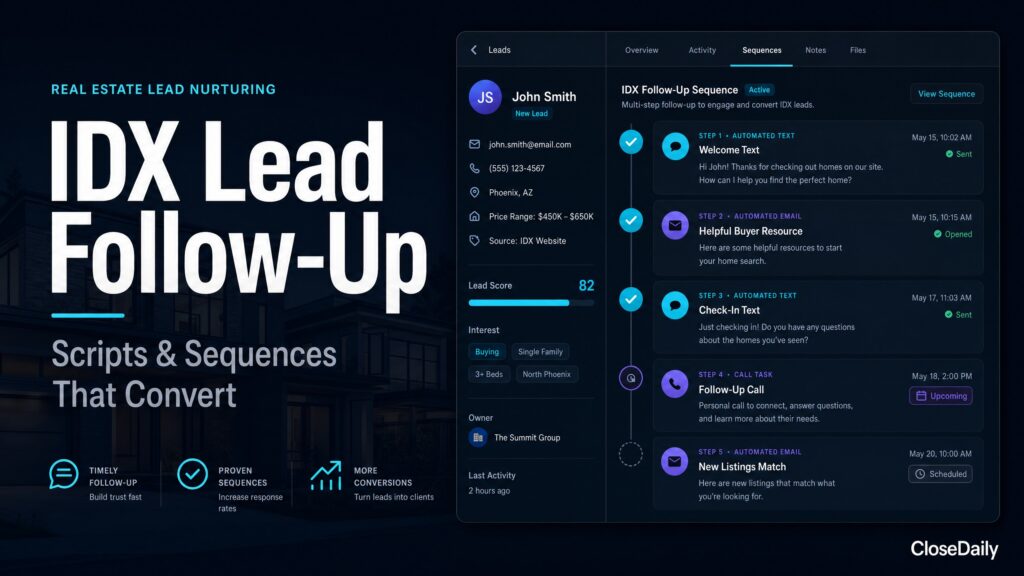
An IDX lead is a fundamentally different animal than a referral. A referral comes to you warm, they already trust you because someone they trust recommended you. An IDX website lead comes to you curious, they were browsing listings, hit a registration gate, and entered their information to keep searching. They don’t know you. They might not remember registering an hour later.
The follow-up approach that works for referrals (a friendly call, a casual check-in) doesn’t work for IDX leads. These leads need a specific sequence designed for their mindset: interested but uncommitted, browsing but not ready to be sold. Here’s how to follow up with IDX leads in a way that converts them into appointments and eventually closings.
Understanding the IDX Lead Mindset
When someone registers on your IDX website, they’re telling you three things. They’re actively interested in real estate in your market. They’re in research mode, gathering information and exploring options. And they’re willing to exchange their contact information for access to listing data.
What they’re NOT telling you: that they want to be called by an agent right now, that they’re ready to tour homes this weekend, or that they’ve chosen you as their agent. Most IDX leads are weeks or months away from making a move. The agents who convert IDX leads understand this timeline and build their follow-up around patience and value delivery rather than aggressive closing attempts.
The First Five Minutes: Automated Engagement
Speed matters more than anything in the initial response. Research from the National Association of Realtors shows that leads contacted within five minutes are 21 times more likely to convert than leads contacted after 30 minutes. But “contacted” doesn’t have to mean a phone call.
The ideal first touchpoint is an automated, personalized message that goes out within minutes of registration. Not a generic “thanks for signing up” template. A message that references the lead’s actual behavior.
If they were searching for 3-bedroom homes in Lakeway under $500K, the message should acknowledge that: “I noticed you were looking at homes in Lakeway in the $400-500K range. That’s a great area, inventory has been moving fast there this spring. I put together a few listings that just came on the market that match what you’re looking for.”
This kind of personalized, behavior-based follow-up is what CloseDaily’s AI system generates automatically. The AI reads the lead’s search patterns and crafts messages that feel personally written rather than auto-generated. If you’re on a platform without this capability, you’ll need to create segmented email templates that approximate this personalization based on common search criteria in your market.
Day 1-3: The Value Sequence
In the first three days after registration, your goal is not to get an appointment. Your goal is to demonstrate that you’re a valuable resource worth engaging with. Send content that helps the lead in their search process.
Day 1 (within hours of registration): Personalized listing recommendations based on their search criteria. “Based on what you’ve been looking at, here are 3 properties that just hit the market this week.”
Day 2: A neighborhood guide or market insight relevant to their search area. “Since you’ve been browsing homes in [area], I thought you’d find this useful, here’s what’s been happening with prices in that market over the past 6 months.”
Day 3: A soft engagement prompt. “I help buyers in [area] every week and I’m happy to answer any questions about the market or specific properties. No pressure, just here if you need anything.”
Notice the tone: helpful, not salesy. Informative, not pushy. You’re positioning yourself as a knowledgeable resource, not a desperate agent trying to book an appointment.
Week 1-2: The Phone Call Strategy
You should attempt to call every IDX lead within the first 48 hours. But the call approach needs to match the lead’s temperature.
The opening line matters enormously. Never start with “I see you registered on my website”, it feels surveillance-like. Instead, lead with value.
Try: “Hey [name], this is [your name] with [brokerage]. I was putting together some information on homes in [their search area] and wanted to see if there’s anything specific I can help you find.”
If they don’t answer (and most won’t), leave a brief voicemail that mirrors the approach: “Hey [name], just a quick call, I noticed some new listings in [area] that looked really strong and wanted to make sure you saw them. Feel free to call or text me back at [number]. No rush at all.”
Follow the voicemail with a text message, many people screen calls but respond to texts. Keep it brief and value-focused: “Hey [name], this is [your name]. Just left you a quick voicemail about some new listings in [area]. Let me know if you’d like me to send any details over.”
Week 2-8: The Nurture Cadence
Most IDX leads won’t convert in the first two weeks. The real conversion happens in weeks two through eight when consistent, valuable follow-up separates you from every other agent who called once and gave up.
A sustainable nurture cadence looks like this:
Weekly: One automated listing alert based on their saved search criteria. This is passive, the IDX system handles it automatically. But it keeps them coming back to your site regularly.
Bi-weekly: One personal or AI-generated touchpoint. A market update, a new listing highlight, a neighborhood tip, or a genuine question about their timeline. These messages should feel human and contextual, not robotic.
Monthly: One phone call attempt. By the third or fourth call, if they haven’t engaged at all, the lead is likely further out than 90 days. Reduce call frequency but maintain email nurture.
The Behavioral Signals That Mean “Call Me Now”
While most IDX leads need patient nurture, some will send signals that they’re moving from browsing to buying. These signals should trigger immediate personal outreach:
Increased visit frequency. A lead who was visiting your site once a week and suddenly starts visiting daily is accelerating. Call them.
Narrowing search criteria. A lead who was searching broadly across three neighborhoods and a wide price range who suddenly narrows to one specific area and a tighter budget is getting serious. Call them.
Repeated views of the same listing. If a lead views the same property three or more times, they’re emotionally attached to it. Call them about that specific listing.
New saved search in a higher price range. A shift upward in price range often signals that they’ve been pre-approved for a mortgage and know their actual budget. Call them.
Platforms with lead scoring and behavior tracking (like CloseDaily) surface these signals automatically so you don’t have to manually monitor every lead’s activity. The system flags high-intent leads and tells you exactly what triggered the alert, so your outreach can be precisely targeted.
Why Most Agents Fail at IDX Follow-Up
The failure pattern is predictable. Agent gets IDX leads. Agent calls them the same day with a generic pitch. Lead doesn’t answer or isn’t ready. Agent tries once or twice more. Lead doesn’t engage. Agent declares “IDX leads are garbage” and cancels the platform.
The problem isn’t the leads. The problem is expecting IDX leads to behave like referrals. They won’t. They need more touches, more value, more patience, and more sophistication in the follow-up approach. The agents who generate real revenue from IDX leads are the ones who build systems, automated and personal, that maintain engagement over weeks and months until the lead is ready to act.
Build the system. Trust the process. The leads will convert when they’re ready, as long as you’re still there when that moment arrives.
Ready to close more deals?
Join thousands of agents using CloseDaily to build their business.