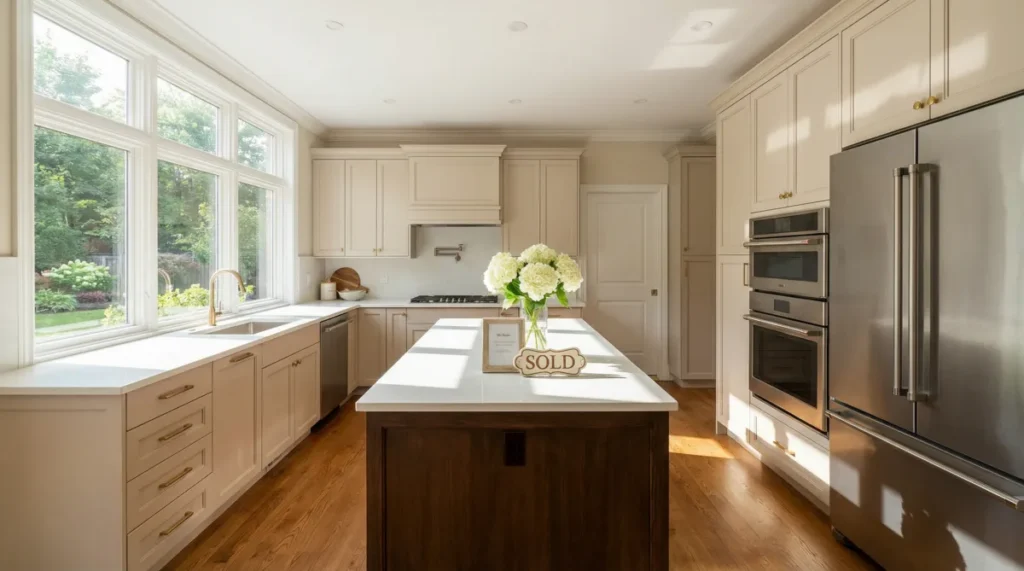
Overpriced listings sit on the market an average of 3x longer than correctly priced ones, and ultimately sell for 5-10% less than they would have at the right price from day one. According to Zillow Research, homes priced within 5% of their true market value sell within 14 days in most metro areas, while overpriced homes linger for 60+ days before the inevitable price reduction. As a listing agent, your pricing strategy is the single decision that determines whether your seller has a smooth, profitable sale or months of frustration and expired listing territory.
This guide breaks down seven proven pricing strategies that top-producing listing agents use to price correctly the first time, generate maximum buyer interest, and close faster. Whether you’re working with a motivated seller or convincing an unrealistic one, these tactics give you the data, scripts, and frameworks to get it right.
Price sets the ceiling on interest, and our overview of real estate marketing covers the promotion side that turns interest into offers.
Why Pricing Right the First Time Is Non-Negotiable
There’s a dangerous myth in real estate: “We can always reduce the price later.” That mindset costs sellers thousands of dollars and costs you listings. Here’s why.
A new listing generates the most buyer activity in its first 7-14 days on market. Buyers and their agents are actively monitoring new listings. If your home hits the market overpriced, those buyers skip right past it, they’re comparing it to better-priced options in the same range. By the time you reduce the price three weeks later, the listing is stale. Buyers assume something is wrong with it.
Key Stat: Homes that undergo a price reduction sell for an average of 8% below their original list price, compared to correctly priced homes that sell for 1-2% above. The first price is the most important price. (Source: Zillow Research)
This is why your listing presentation must include a clear, data-backed pricing conversation. Don’t shy away from it. The agents who win more listings aren’t the ones who promise the highest price, they’re the ones sellers trust to get the price right.
Tip 1: Build a CMA That Tells a Story (Not Just Shows Data)
Every agent does a comparative market analysis. Few do it well. A great CMA doesn’t just list comps, it tells the seller a story about where their home fits in the market. Start by pulling 6-10 comparable sales from the last 90 days within a half-mile radius, then organize them into three categories: sold above asking, sold at asking, and sold below asking.
Present the data visually. Show the seller exactly where their home lands based on condition, square footage, upgrades, and lot size. Use a data-driven analytics dashboard to pull real-time market trends for the neighborhood, days on market, absorption rate, active inventory, and price-per-square-foot trends.
The goal isn’t to overwhelm them with numbers. It’s to make the right price feel obvious. When sellers see 8 out of 10 comparable homes sold between $415,000 and $435,000, and their home’s condition puts them squarely in that range, pricing at $449,000 becomes a hard argument to make, even for the most optimistic seller.
According to NAR’s research, sellers who receive a thorough CMA presentation are 34% more likely to list at the agent’s recommended price. The investment in preparation pays for itself in faster sales and fewer price reductions.
Tip 2: Use the “Bracket Strategy” to Maximize Buyer Exposure
Most buyers search for homes in price brackets: $400,000-$450,000, $450,000-$500,000, and so on. Smart agents price at the bottom of the next bracket rather than the top of the current one. Here’s what that looks like in practice.
If your CMA says the home is worth $445,000-$455,000, price it at $449,900, not $460,000. At $449,900, the home appears in searches from buyers looking at $400K-$450K and buyers looking at $450K-$500K. At $460,000, you’ve cut off an entire pool of qualified buyers who capped their search at $450K.
This strategy consistently generates more showings, more offers, and often a final sale price above what a higher list price would have produced. As NAR research confirms, increased showing activity is the single strongest predictor of final sale price, more eyes on a property means more competition among buyers.
Tip 3: Price Reductions Should Be Strategic, Not Reactive
If you need to reduce the price, don’t nibble. A $5,000 reduction on a $450,000 home signals desperation without actually changing buyer behavior. Reduce aggressively enough to move into a new search bracket, typically 3-5%, and do it early (within the first 14-21 days) before the listing develops a stigma.
Set expectations with your seller at the listing appointment. Tell them upfront:
Script: “Here’s how I approach pricing. We’re going to price your home based on the data to attract maximum buyer interest in the first two weeks. If we get 10+ showings and no offers, the market is telling us something, and we’ll adjust quickly to stay ahead of it. My commitment is that you’ll never be guessing about what’s happening.”
This script does two things: it positions you as a proactive strategist (not someone who’s winging it), and it gets the seller to agree to future adjustments before emotions take over. For more scripts that handle pricing objections, explore our pre-built scripts library.
Win More Listing Appointments With Data-Driven Pricing
CloseDaily’s AI-powered CMA tools and real-time market analytics give you the data to price with confidence, and the scripts to present it.
Tip 4: Factor in the “Emotional Premium” (And Know How to Counter It)
Every seller believes their home is worth more than the comps suggest. They’ve raised kids there. They’ve renovated the kitchen. They remember what the neighbor’s house sold for two years ago. This “emotional premium” is the number one reason listings get overpriced, and it’s your job to handle it with empathy and facts.
Don’t fight emotions with logic alone. Acknowledge their attachment, then redirect to what buyers actually pay for. Try this approach:
Script: “I completely understand, you’ve put so much into this home, and it shows. The challenge is that buyers are comparing your home to every other option on the market right now, and they make decisions based on price per square foot, condition, and location. Let me show you exactly how buyers in this price range are shopping, and where your home wins.”
This validates their feelings without conceding on price. Then show them the data. When the emotional premium clashes with the CMA, the data should win every time, and presenting it with empathy (not condescension) is what separates great listing agents from average ones. Practice this conversation with an AI roleplay partner before your next listing appointment so it feels natural.
Tip 5: Study Days-on-Market Trends, Not Just Sale Prices
Most agents fixate on sale prices when building their CMA. Top producers pay equal attention to days on market (DOM). Here’s why: DOM tells you how the market feels about a price point. A home that sold at $430,000 in 8 days was likely underpriced. A home that sold at $430,000 in 75 days was probably overpriced and reduced.
Key Stat: The median days on market nationally is 33 days in 2026. Homes priced within 3% of market value sell in an average of 11 days, nearly 3x faster than the median. (Source: Redfin Data Center)
Track the DOM for every comp in your CMA. If most homes in the $425K-$450K range are selling in 10-15 days, and one sat for 60 days before selling at $428K, that outlier doesn’t define the market, it was probably overpriced initially. Understanding this distinction helps you set a price that generates strong showing activity immediately rather than letting the listing go stale.
Get Real-Time DOM and Pricing Data for Any Neighborhood
CloseDaily’s listing management tools track days-on-market trends, price-per-square-foot shifts, and absorption rates so you walk into every listing appointment with the freshest data available.
Tip 6: Use Pre-Listing Marketing to Test the Market
“Coming soon” marketing is more than a branding play, it’s a pricing intelligence tool. Before officially listing the home, run a 5-7 day “coming soon” campaign on social media and through your sphere of influence. Track the number of inquiries, scheduled private showings, and buyer agent calls.
If your “coming soon” post generates 30 inquiries and 8 private showing requests, you can confidently price at the top of your CMA range. If it generates 3 inquiries, you know the market needs a more aggressive price point. This pre-launch data takes the guesswork out of pricing and gives you ammunition for the pricing conversation with your seller.
Use a social media planner to schedule your “coming soon” content across platforms, and pair it with AI-powered listing alerts to notify registered buyers in the area automatically. The combination of organic social reach and targeted buyer notifications ensures your pre-listing campaign reaches the right audience.
Tip 7: Present Three Price Options (And Recommend One)
Don’t walk into a listing appointment with one number. Present three options and let the seller feel in control of the decision, while guiding them toward the right one.
Option A (Aggressive): 3-5% below the top of your CMA range. “This price will generate maximum activity and likely multiple offers within the first week. You’ll probably sell above list price.”
Option B (Market Value): Right at the center of your CMA range. “This is where the data says your home should sell. Expect steady showings and an offer within 2-3 weeks.”
Option C (Aspirational): 3-5% above the center of your CMA range. “We can try this price, but I want to set clear expectations: if we don’t see strong activity in 14 days, we need to adjust immediately. Here’s what that timeline looks like financially…”
Then recommend Option B with conviction. When sellers see all three options laid out with projected timelines and outcomes, they almost always choose the middle, which is exactly where you wanted them. This three-option framework turns a tense pricing conversation into a collaborative decision. It also protects you from the seller who later says “you should have told me”, you gave them full transparency.
According to research from the Harvard Business Review, people presented with three choices feel more confident in their selection than those given a binary option. This psychological principle works powerfully in listing presentations.
For more strategies on winning listing appointments and presenting with confidence, read our complete guide to securing more seller clients in 2026 and our comprehensive lead generation playbook.
The Pricing Conversation: Your Competitive Advantage
Most agents avoid the hard pricing conversation. They tell sellers what they want to hear, list the home too high, and watch it expire 90 days later. That approach costs you your reputation, your client’s money, and months of your time on a listing that was never going to sell at that price.
The agents who dominate their market approach pricing differently. They bring data, present options, set expectations early, and position themselves as the expert, not the order-taker. Your ability to price a listing correctly is the single most valuable skill you can develop as a listing agent.
Master these seven strategies, and you’ll sell listings faster, earn more referrals from happy sellers, and build a reputation that brings future clients to you before you ever have to prospect for them. Pricing comes down to more than numbers. It’s about trust, communication, and proving to sellers that you know exactly how to get them the best result in the shortest time.
Price Every Listing With Confidence
CloseDaily gives listing agents the real-time market data, AI-powered CMA tools, and proven scripts they need to price right, present with authority, and close faster. Stop guessing, start knowing.
Ready to close more deals?
Join thousands of agents using CloseDaily to build their business.