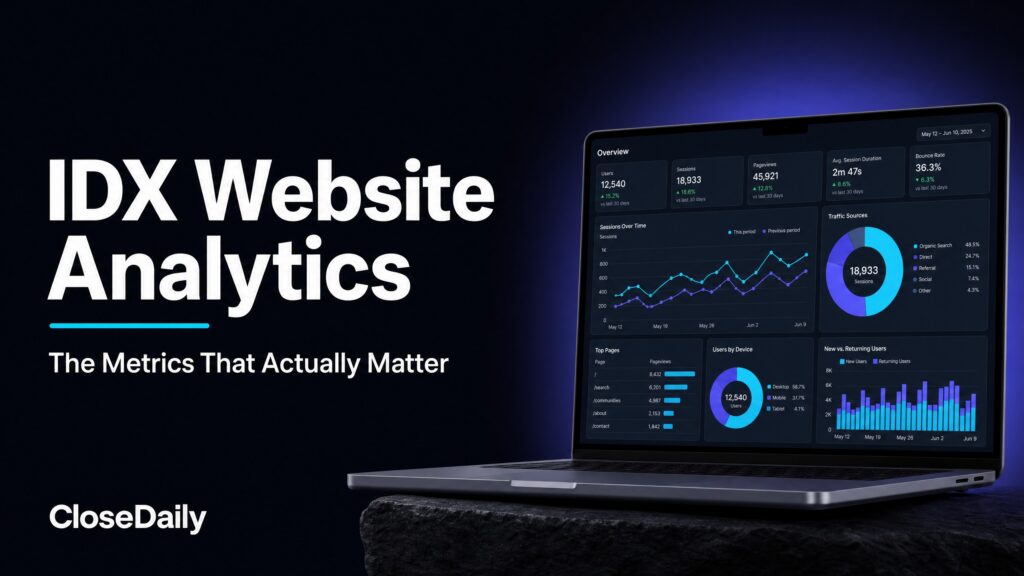
Your IDX website generates data. Lots of data. Page views, unique visitors, bounce rates, registration numbers, search queries, listing views, saved searches, return visits. Most agents either ignore all of it or obsess over the wrong numbers.
Pageviews don’t pay your mortgage. Neither do visitor counts. The metrics that matter are the ones that predict which leads are going to become clients and which are just browsing for entertainment. Here’s what to track and what to ignore.
Vanity Metrics vs. Revenue Metrics
Vanity metrics make you feel good. Revenue metrics make you money. Learn to tell the difference.
Vanity metrics: Total pageviews, total unique visitors, social media followers, bounce rate in isolation. These numbers go up and feel like progress, but they don’t directly connect to closings.
Revenue metrics: Registration rate, lead-to-appointment conversion rate, cost per registered lead, return visitor frequency, search specificity changes, and listing engagement depth. These numbers predict whether your website investment is generating actual business.
The Five Metrics Worth Tracking
1. Registration Rate. What percentage of visitors register on your site? This is your most important top-of-funnel metric because it measures whether your IDX experience is compelling enough to convert anonymous browsers into known leads.
Benchmark: A well-optimized IDX website converts 3 to 8 percent of visitors into registered users. Below 3 percent means your registration gate timing needs adjustment, your search experience isn’t engaging enough, or your traffic isn’t targeted (visitors are landing on your site but aren’t actually looking for homes in your market).
2. Return Visit Frequency. How often do registered leads come back to your site? This metric separates casual browsers from active buyers better than almost any other signal.
A lead who registered, browsed once, and never returned is likely months away from buying or was never serious. A lead who returns three or more times per week is actively searching and approaching a decision point. When you see return frequency increase, that’s your signal to make personal contact.
3. Search Specificity Narrowing. Are your leads’ searches getting more specific over time? A lead who starts searching “homes under $500K in Austin” and gradually narrows to “3-bed homes in Circle C Ranch under $475K” is moving from exploration to decision-making.
This behavioral shift is one of the strongest indicators that a lead is getting serious. Platforms with behavior tracking, like CloseDaily, surface this data automatically so you can see which leads are narrowing their criteria and reaching out at exactly the right moment.
4. Listing Engagement Depth. How many listings does each lead view per session? How long do they spend on listing detail pages? Do they save listings as favorites? Do they share listings with someone else?
High engagement depth (10+ listings viewed per session, multiple saves, return visits to the same listings) indicates an active buyer. Low engagement depth (one to two listings, no saves, brief visits) suggests casual interest or a lead who hasn’t started their search in earnest.
5. Lead-to-Appointment Conversion Rate. Of the leads your IDX site captures, what percentage ultimately schedule an appointment or begin actively working with you? This is the metric that connects your website investment directly to revenue.
Benchmark: A healthy lead-to-appointment conversion rate for IDX leads is 5 to 15 percent over a 90-day period. Below 5 percent typically indicates a follow-up problem rather than a lead quality problem. The leads are there, they’re just not being nurtured effectively enough to convert.
Using Analytics to Improve Follow-Up
The real power of IDX analytics isn’t reporting, it’s using the data to make better decisions about who to call and when.
When you see a lead’s return frequency spike from once a week to daily, that’s not a data point. That’s a phone call you should be making today. When a lead who’s been searching broadly suddenly saves three listings in the same neighborhood, that’s not a metric. That’s an opportunity to send a personalized message about that specific neighborhood.
AI-powered platforms automate this behavioral response. CloseDaily’s system monitors these signals continuously and adjusts follow-up messaging in real time. But even without AI, simply reviewing your lead activity weekly and identifying the leads showing buying signals will dramatically improve your conversion rates.
The Dashboard You Actually Need
Most IDX analytics dashboards overwhelm you with data. You don’t need fifty charts. You need a daily view that answers three questions:
Who registered today? Quick scan of new leads with their search criteria so you know who to call.
Who’s hot right now? Leads with increasing visit frequency, narrowing searches, or repeated views of specific listings. These are your priority outreach targets.
How is my funnel performing? Registration rate trend, lead volume trend, and appointment conversion rate. These three numbers tell you whether your online lead generation is healthy, growing, or in trouble.
Everything else is interesting but not actionable on a daily basis. Save the deep dives for monthly reviews when you’re evaluating strategy rather than executing tactics.
The Metric Most Agents Miss
The single most underrated metric in IDX analytics is time between registration and first personal contact. The data is overwhelming: leads contacted within five minutes convert at twenty-one times the rate of leads contacted after thirty minutes.
Track your average response time religiously. If it’s over fifteen minutes, that’s the number one thing to fix, more impactful than any design change, content strategy, or traffic campaign. Automated AI follow-up from platforms like CloseDaily ensures the initial engagement happens within minutes, every time, regardless of whether you’re available to make a personal call.
Measure what matters. Ignore what doesn’t. Act on what the data tells you. That’s the entire analytics strategy you need.
Ready to close more deals?
Join thousands of agents using CloseDaily to build their business.